how to solve ” Deceptive site ahead “

Almost every modern browser has anti-malware and anti-phishing protection turned on by default. Once Google blacklists a website, visitors see the warning page below. This post explains the “Deceptive site ahead” error and how to fix it.
Most infected sites don’t belong to hackers. They belong to ordinary owners whose website isn’t secure enough or has a bug. Hackers can infect these sites in several ways, for example:
- infecting the PHP and HTML files of a website
- redirecting visitors to other web pages, usually built for phishing or for infecting the visitor’s computer
- uploading .swf files to the website
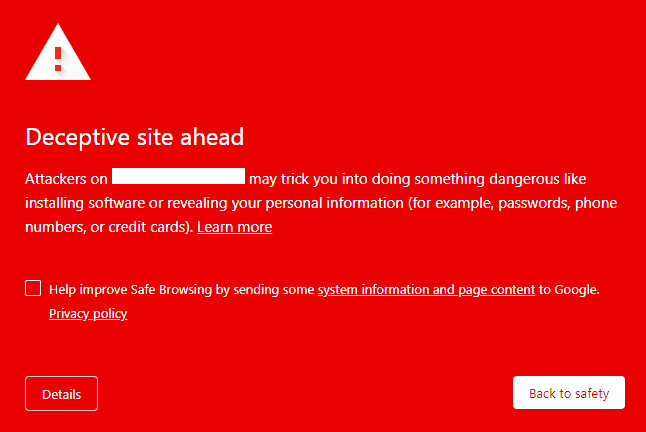
“Deceptive site ahead” appears for three reasons:
- the site is infected with malware
- the site is suspected of hosting harmful programs
- the site is trying to load infected code into the visitor’s browser from an unauthorized source
What is malware?
Malware is a malicious program written to access or damage a system without the owner’s knowledge. Worms and trojans both fall into this category.
How do you know if your website is infected?
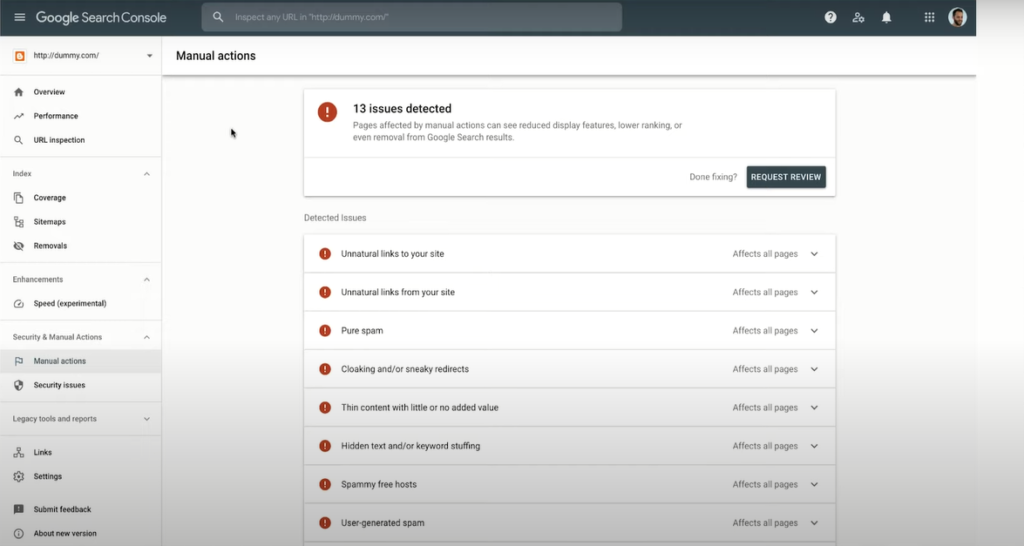
There are many ways to check, but the simplest is Google Search Console. Follow the path below. If the page shows warnings like the ones in the image, it’s time for some serious damage control.
set up -> security & manual actions -> security issues
How to solve the “Deceptive site ahead” error
Once you’ve confirmed the site is infected, there are a few things you can do. These steps often solve the problem, but in many cases the injected code gets past these protections and you’ll need professional help.
Note: while you troubleshoot, take the website offline so the infection doesn’t hurt your domain’s Google ranking.
- Most hosting providers, such as avanet, run anti-malware software on their servers. If a website is infected, start by scanning it on the server.
- Add your site to Google Search Console. Google’s crawlers are good at finding threats across the Internet.
- Many owners don’t realize their own computer can be the source of the infection. Scan every computer that connects to the host or edits the code for viruses.
- Restoring a backup is not a fix on its own. A hacked site means there is a flaw in the code. Rolling the site back to a point before the incident doesn’t remove that flaw, and the attacker can easily take the site down again.
- Click Request Review to ask Google to review the site once the problem is fixed.
Keep in mind that most of these sites are built on a CMS such as WordPress, and plenty of published guidance exists on how to protect them from these attacks.